The topic that I have decided to go with for my digital essay research project focuses on how reliable AI is when it comes to trusting it with our lives. I landed on this topic by initially wanting to research the dangers of artificial intelligence. However the dangers of AI were too broad so after researching I had a handful of articles that involved the reliability of AI with human lives. They focused on areas such as healthcare, cars, and the military which were very intriguing to me. Some research questions could be: How accurate is AI when distinguishing between combatants and civilians in military applications? What are the main factors that affect the reliability of self-driving cars in preventing accidents? How does public perception of AI reliability in healthcare influence its adoption for life or death decision making? I think these are all very specific and interesting questions towards the three fields that I want to focus on in my project. I plan to use data visualizations that accurately represent the success of artificial intelligence in the military, healthcare, and with cars. I also plan to look at customer reviews for cars with self driving capabilities. Specifically with Tesla which will have the most reviews since it is the most popular capable car of self driving. So far the only research that I have done on my topic is with the original annotated bibliography. Although this annotated bibliography was a different topic, almost all of the sources contain useful information that will be used for my newer and narrowed topic. I plan to do further research on my project by looking through Forbes, which you recommended in our meeting with each other, and I also want to look at Tesla cars’ customer reviews to learn about what the users think about the product. Currently, the source that I am most interested in is my scholarly source “DRONE WARS,” by Greg Miller which discusses the dangers of artificial intelligence in drone warfare. I think that I have good roots for my research project and am excited to further work on it. I plan to finish my research by March 21st, finish my introductory paragraph by the 24th, and a full rough draft by April 7th.
My thinking for my research project overall changed by understanding that the scope of my project should narrow in order to form a more accurate and interesting research essay. To modify my project, I am changing my thesis to “How reliable is AI when it comes to trusting it with our lives? This includes cars, healthcare, and the military which are three critical areas in the world that are seeing advancements in artificial intelligence that will have a lot of material for me to research. Going forward, I am going to be conducting further research on scholarly sources in scopus, computers and applied sciences, and forbes as we discussed in our meeting. Specifically, I am going to go to Forbes first because we discussed how they have a lot of articles on artificial intelligence. After that I will go to the other scholarly sources as we discussed. After all of that research is done, I will begin to write my research paper. I am looking forward to these next steps in my project!
The data visualization that I selected analyzes data at the NFL combine in 2016. This is accomplished through a graph of bench press in reps versus vertical jump in inches. This graph also includes all positions and color codes them. This enables the viewer to observe the discrepancies between positions. The visualization successfully presents the strength boundaries between each position and is very convincing on the incredible strength of NFL athletes. This is successfully done through a large composition of data from individual athletes of eight different positions. I think that this piece would not work without a visualization because of the copious amounts of data pieces. There were 332 athletes at the 2016 NFL combine making the data extremely difficult to reflect without a data visualization unless averages for each position were drawn. The style of the chart is very suitable for the data. Not only does it show the variances between bench press reps and the height in inches of the athlete’s vertical jump, but shows the strength differences between positions. Another data visualization style that would work is a bar graph that shows the averages for each position.The creator of this visualization is Michael Todisco at the NYC Data Science Academy. Todisco currently works at FanDuel though has over a decades worth of experience in data science writing articles on top tier athletes such as those in the NFL combine.
The audience for the article that my selected graph was published with are dedicated sports fans, NFL coaches, and other sports data science analysts. All of the data derived from this graph is from the performances of athletes from the 2016 NFL combine. The original data set which composes an in depth analyzation of all athletes from the combine is at pro-football-reference.com. The format the data is in from pro football reference is taken through a spreadsheet. Each row of this spreadsheet has the athlete’s name, position, school, college stats, height, weight, and all statistics from the combine drills. This data set could be subject to the biases of its authors by portraying that the strongest players at the combine will be the best in the NFL. However, this is not true because some of the best players in the NFL are the quarterbacks and the results from the 2016 combine show that collectively they are the weakest group.
I think that in order to make the analysis of the data easier, there should be a colored trend line for each position. Currently it is simply a large clump of colorful dots where you can generally see the differences in data from positions but I think that a trend line for each respective position would definitely aid the viewer in drawing conclusions for the data.

Since the beginning of this digital culture and information course, we have been learning about the dangers of AI. Algorithms that are embedded in the code of apps, such as in social media, can direct us towards information that we want to hear which creates a bias. There are many risks and precautions that we must account for before using AI though what about AI being used for good?
An idea that I have for an app is called ScoreZone. ScoreZone is an application that shares your best sports highlights in short clips and allows you to explore other peoples short highlights too! The sector that the app is a part of is a combination of Sports and Social Media. This app will prevent bias and harm by only allowing sports clips to be posted. This is ensured through our smart AI system that detects and rules out what is a sports clip and what is not. The algorithm used will direct users to sports of their liking and to the greatest highlights. I believe that this will pass the algorithm audit because it will not have the flaws that many other social media platforms have today. These issues include data leaks, automation bias, and echo chambers. The purpose of this app is to make your day better through awesome sports clips. There are no political motivations or controversial posts which are the reason why other social media applications run into these flaws which make their reliability questionable. The only thing questionable about ScoreZone is if you have the best sports highlight out there!
I think that this app could potentially improve the world solely by being a bias free app. Nowadays everyone is worried about the political and economic state of the world, and can’t find a break on the popular social media apps. ScoreZone will help users find joy in amazing sports clips by allowing them to take a break from the stressful real world.
While brainstorming potential project topics I started looking at the things I would find interesting that are in relation to digital culture and information. One thing that immediately came to mind was my use of social media. I use social media every single day and never know when to stop. Snapchat, tiktok, and instagram are the main ones that I can never pull myself away from. One thing that I have always thought about while using these apps is how has social media impacted our personal identities and self expression? Social media allows individuals to shape their own identity across platforms presenting an idealized version of themselves. With my project I could conduct research on how social media has changed people’s identities for the better and worse, as well as how this could positively and negatively affect the future of digital culture. I could also explore how algorithms push out these idealized images to people all over the internet which further affects digital culture.
Another area that I searched through while looking for a potential project topic was with my major. I plan to major in either business administration or economics. One large relation between digital culture with my potential majors is cryptocurrencies. I thought of this immediately because my mom works with PayPal and their cryptocurrencies. In this area I could further explore the rise of cryptocurrencies and their impact on traditional banking systems. Could banks adapt to coexist with crypto currencies or will our economics one day become fully digital? Another question I have is are NFT’s and digital ownership a sustainable investment? Digital culture has been shaping the future and changing our economics. I think this could be a cool topic to research because of this sudden rise of cryptocurrencies that we have been seeing and I am certain it would be something my mom would love to talk with me about!
Although I have a hip injury and was unable to thoroughly walk through campus, from online research and aid from my friends outside of our DCI class our internet comes from a data center on campus.
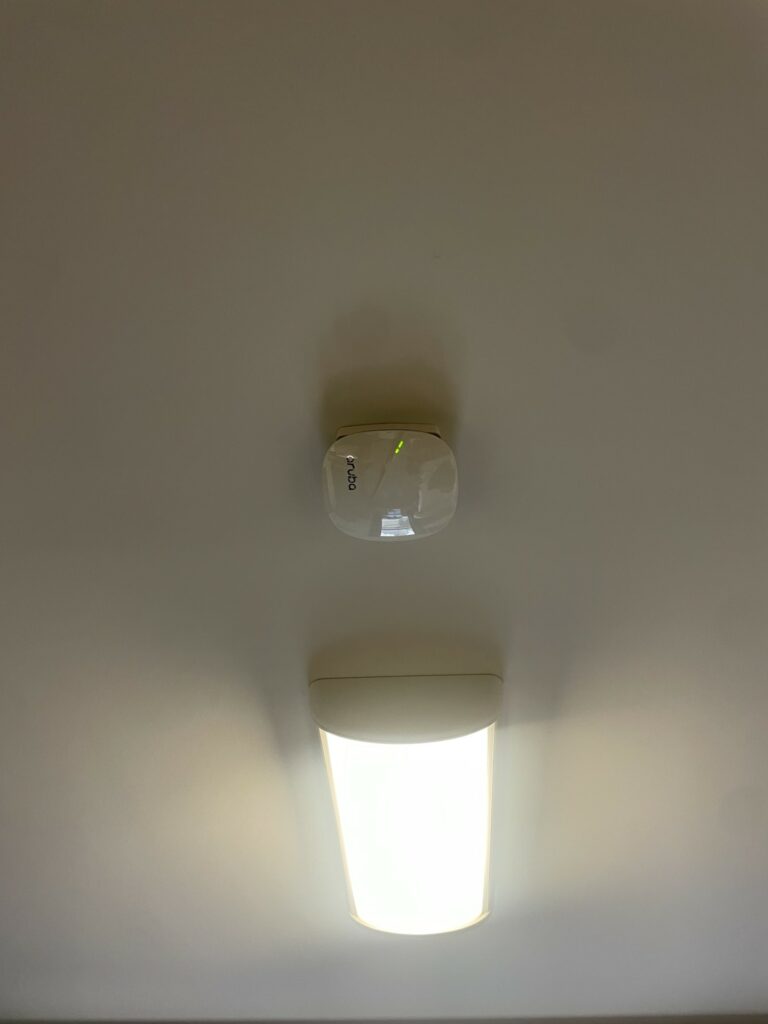
With the network that provides us all on campus with limitless wifi I can discern that it originates from the data center and is spread across campus through routers which are further dispersed through wireless extenders. The routers are harder to find but the wireless extenders are everywhere. They are in every dorm room, hall way, and classroom. Almost everywhere you go there is an extender in sight on the ceiling. The places where wifi drops out are where there are no wifi extenders in sight. This is typically outside of buildings and especially as you walk further away from campus into town. I believe that the wires are hidden underground and in the ceilings and walls of buildings. The wires that run underground connect all of the buildings together, while the ones in the ceiling and walls supply internet to the routers. Routers are strategically placed throughout each building on every floor ensuring all extenders are in range to supply everyone with limitless wifi.
I think the overlooked spaces on campus are where we receive internet from such as the data centers. Nobody wonders where the wifi comes from because it’s invisible and has been normalized in our everyday lives. From what I could gather from information from my peers outside of this class, the only data center that I could locate is in the science center. Although I have not personally been in this data center, this location would make sense for two different reasons. The first is that the wifi is very strong in the science center. Last semester I took a chemistry class where I constantly used my computer and found that the wifi had higher speeds than most of the other buildings on campus. The second reason is that the science center is located near the center of campus which makes the distribution of internet throughout Washington and Lee much easier.
In the unlikely case that a fiber is cut or an internet service provider goes down, I think the whole campus would go dark. There would be no form of communication to students through digital messages and our courses would have to convert to traditional ways of teaching through whiteboards to pencil and paper. This would all be until our problem is resolved by our talented electricians though I hope that day never comes!
Here is an example of a wireless extender in my dorm room:

Testing out HTML
…
Watch my high school highlight tape here!- My Favorite Movies:
After learning about HTML through readings and in class discussions I thought it was going to be hard. That was until I tested it out for myself in this blog post. Some of the new features implemented through HTML are the background colors for my header, my picture from my yearbook from my senior year in highschool, the link to my favorite video on the internet (you should go and take a peak), and the list of my top three favorite movies. Adding these new features was simple due to the amount of aid that W3schools supplied us through their website. Their website provided codes for anything you could imagine to be on a blog page. Due to this, I was able to legally copy and paste their codes into my page and make minor adjustments so that the code worked how I wanted it to. I think that without W3schools, I would have not been able to write the code because of how intricate the learning process is. One thing that I found difficult with HTML aside from the aid that W3 schools provided me was trying to change the background color for specific texts that I wanted. I tried to copy and paste the code from background color and then edit what text could be overlapping though I could never get it to work. These texts include my link to my favorite video(again please go watch it) and the list of my top 3 favorite movies of all time. Besides that, the learning process was very easy and I would definitely be interested in using HTML again. I have coded before using applications such as Java which was much easier than HTML, though it seems very intriguing to learn a new coding language that could impress my peers!
JJ Kim is a 6 foot tall freshman at Washington and Lee University. He grew up in McLean VA with his mother, father, and two sisters. He currently plays lacrosse at the university in the goalie position wearing number forty. Prior to college, Kim attended The Potomac School in McLean, VA from kindergarten till the end of high school. His extracurriculars, then, included varsity lacrosse and soccer, while managing an above average GPA. Outside of school, he played for a competitive club lacrosse team named Madlax. Madlax is one of the best club teams which helped him find his current home, Washington and Lee.
While conducting my research, the information that I could find was about my long term lacrosse history. This makes sense because my club lacrosse team loved to advertise their players in order to help them find great schools such as Washington and Lee. Other than lacrosse, I could not find much else. There was no information regarding my family besides one recruiting website that listed my parents and two sisters. The funny part about that is I was the one that created that recruiting page listing them. Nothing was really surprising about this to me. Besides lacrosse I do not achieve anything outstanding that would find its way on to the internet.
One thing that I could not find that I expected was my sophomore year Spring highlight tape. After conducting further research, I discovered that it was taken down due to copyright restrictions on the song that I decided to use. Initially, I searched up JJ Kim which provided a large volume of people with the same name that looked nothing like me. Then, I tried searching with different key words such as academics, Virginia, and family, but nothing yielded any results except lacrosse which showed a dense history of my recruiting process. The web has followed me from eighth grade until now in college through lacrosse. To me, the coolest part about this was being able to view my athletic statistics over time.
While using the internet, I was taught to be careful who you speak to and don’t do anything that would harm your digital footprint. I’ve heard from countless coaches, parents, and peers how having a foul digital footprint can affect your future while finding jobs and I made sure to stay true to their thoughtful warnings. Almost all of the information that I discovered was on a plethora of recruiting websites. Though I did see certain links to my instagram page and my many highlight tapes from over the years. If a researcher from the future is trying to learn about me, they are missing out on my life outside of lacrosse. They would have little to no clue about my family, friends, and the person I was and have become. Hopefully someday there will be information on the web describing the person that I am so that the researcher can better understand me.
I decided to join this class because the title Digital Culture and Information was very intriguing to me. I am constantly online and I hope that this class can help me learn more about the interfaces that I use. Digital Culture and Information is seen in my personal life through my gaming console, personal computer, and phone by texting friends, watching videos, and playing video games. For my academic life it is seen in emailing professors and classmates, completing assignments on canvas, and reading articles on the web. What I find most interesting about issues in Digital Culture and Information is the spread of misinformation online. This is concerning because it is something I encounter and must watch out for every day on social media.
By the end of this class, I hope to learn more about the interfaces that I use in order to be safer online. What this looks like for me is by altering the way I look at information presented to me. I also hope to explore the digital world through a different lens that is optimistic and not too gullible. In the past I always believed everything that I saw on my screen and went as far as further spreading it to my peers blind to the fact that the information was false. In our Digital Culture and Information class, success for me does not require a high letter grade. Although achieving an A would be amazing, my reasoning for taking this class is to learn more about the digital world that I encounter every day. Obtaining such knowledge about this growing world, specifically through the goals that I previously listed, is what I believe would be the greatest achievement in this class. Digital culture has been rapidly growing and this class seems perfectly suitable for students like me that are constantly online. I can’t wait to learn more about myself and digital culture over the course of this term!