How reliable is artificial intelligence when trusting it with our lives? Would you or would you not trust it? Over the course of this essay you will learn more about the results of AI being tested in fields such as healthcare, the military, and in automotive vehicles and hopefully will have enough information to answer these questions for yourself.
Healthcare
With the advancements of technology comes the advancements in healthcare. Artificial intelligence has increasingly been incorporated into fields in healthcare to assist doctors in the curing process for their patients. Two areas that have seen the most improvement because of artificial intelligence are diagnostics and electronic health records (EHR) analysis.
Diagnostics
What are diagnostics? When a patient goes to the doctor, the doctor conducts a series of tests and procedures in order to identify what is wrong with the patient. This series of tests are the diagnostics. Artificial intelligence has been implemented in diagnostics to analyze medical data by utilizing sub domains such as machine learning and natural language processing. It has been increasing so much that according to Forbes, “an interdisciplinary field that replicates human intelligence in machines using computer science and machine learning — is expected to see an annual growth rate of 37.3% from 2023 to 2030” (Forbes). The reason why we are seeing this growth is because of artificial intelligence’s efficiency while working by “mimicking human cognition, enhanced by immense computational power and speed” (MGMA). The algorithms that these computers use can remarkably identify trends in patient data from previous visits and then link symptoms to potential conditions. They can accomplish this task much better than doctors because of their deeper understanding of the patient’s medical history. These systems also often detect abnormalities that could have been overlooked by doctors especially in situations involving high pressure or time sensitivity. Another interesting aspect of the system is its early disease detection skills. This can be particularly hard for doctors, and “Accurate and timely medical diagnosis is crucial for early detection and better treatment outcomes, and using AI to assist provides numerous benefits…” (MGMA). Artificial intelligence can accomplish this through continuously monitoring wearable devices and health systems that provide health data for a patient. This enables it to identify early warning signs of conditions like heart disease or diabetes before the symptoms become severe.
Electronic Health Records (EHR)
Electronic health records are digital versions of a patient’s medical history and other health related information. Artificial intelligence is being utilized in the analysis of electronic health records by avoiding past mistakes and reducing clinical burden. The original purpose of electronic health records was to revolutionize care delivery, however, these intentions often fell short caused by their poor design, inadequate training, and a lack of clinician-centered implementation. Artificial intelligence has shown improvements by learning from these past mistakes by being designed to fit naturally into existing workflows. These tools have clear benefits that do not require excessive adaptation or additional training time which humans require for the job. While artificial intelligence’s implementation has been very promising, there has also been skepticism made around the idea:
“Artificial intelligence (AI) has the potential to improve care quality by decreasing medical errors and reducing clerical burdens for physicians. While this embrace of AI is exciting to many providers, it leaves others with a sense of déjà vu: Less than twenty years ago, the same promises were made regarding the then-novel Electronic Health Record” (npj).
The overall implementation of artificial intelligence in healthcare has been very promising by reducing human errors and prioritizing efficiency in finding cures and diagnoses for patients. It is still in its early stages of being utilized in healthcare but areas such as diagnostics and electronic health records analysis have been proven to be enhanced by the aid of artificial intelligence.
Military
The military has also tested the performance of artificial intelligence in their operations. Some areas that they have tested include decision making support and cyber security measures. These results were just as promising as the ones received in healthcare.
Decision Making
Decision making is key to the military’s operations and the defense of our country. It is a process of analyzing risks, developing a course of action, and making informed decisions. Traditional decision making in the military has flaws caused by human error which are prone to happen due to the high pressure situations that they face. The implementation of artificial intelligence potentially could fix this problem. A specific system that has been tested in the military is the AI-based decision support systems (AI DSS). They are designed to assist human decision makers for these high pressure scenarios. “AI DSS is often cited by militaries as a key enabling technology for faster and enhanced decision-making cycles, with some militaries reporting time savings of 30–50% in certain planning and targeting tasks” (Humanitarian Law & Policy). The data reflects an overall positive result of artificial intelligence being used in these scenarios. A major factor that should also be considered is that artificial intelligence is being used to support humans and not replace them. They provide recommendations and predictions that yield towards a more accurate decision to be made in order to protect our country. This ensures that human operators are engaged in situations to abide by legal obligations in military operations.
Cyber Security
The purpose of having a strong cyber security is to fight off cyber attacks, unauthorized access, and other threats to protect computer systems, networks, and government data. Artificial intelligence has been employed in cyber security to enhance threat detection and prevention. This is a major advancement in how military defense systems manage cyber risks by providing a powerful tool for identifying potential attacks before they are able to cause harm. These systems work by rapidly analyzing large volumes of data from multiple sources in order to detect suspicious activity that could indicate a cyber attack. The sources that it accesses include network traffic, system logs, and user behaviour patterns. For traditional human operators this process can be long, inconsistent, and difficult in order to snuff out an anomaly. Though, artificial intelligence’s constant monitoring can eliminate this issue. This is specifically important for the military because they often are targeting high value personnel while managing a strict timeline. This signifies the importance of high detection speeds and reducing false positives. While these results are extremely positive and show how artificial intelligence can be usefully employed in the military, it is also suggesting that these artificial intelligence systems will replace humans opposed to aiding them. This is opposite to what artificial intelligence provides for military decision making enhancements though they are different fields. What do you think would happen if the military’s cyber security was fully surveyed by artificial intelligence systems? Thus far, data has provided positive results and abilities that humans don’t have which fortifies our systems.
Driving Systems
The utilization of artificial intelligence in cars is the most common major implementation that is seen by the public. The most popular company that started the trend was Tesla, though companies such as Lucid, BMW, Mercedes, and many more have also begun to incorporate artificial intelligence systems into their cars. The artificial intelligence systems are employed in these cars to do many things beyond simply making the car self-driving. They power infotainment systems which learn the preferences of the driver and can adjust settings such as climate control, music volumes, and seat positions automatically. These systems are also able to analyze real-time traffic data, road conditions, and historical trends to suggest different routes to the drivers destination. With this navigation feature they can provide personalized recommendations to restaurants and gas stations which can improve the efficiency of the trip while promoting driver satisfaction. The most important feature which keeps the drivers safe are the advanced driver assistance systems (ADAS). These systems include adaptive cruise control, automatic emergency braking, and lane-keeping assist. To accomplish this, they utilize cameras, sensors, and algorithms that are able to detect hazards while monitoring blind spots and help drivers maintain safe distances in good lane positioning. But how accurate are the advanced driver assistance systems powered by artificial intelligence? The National Highway Traffic Safety Administration revealed the advanced driver assistance systems crash data from the years 2021 to 2024 and the results were shocking:
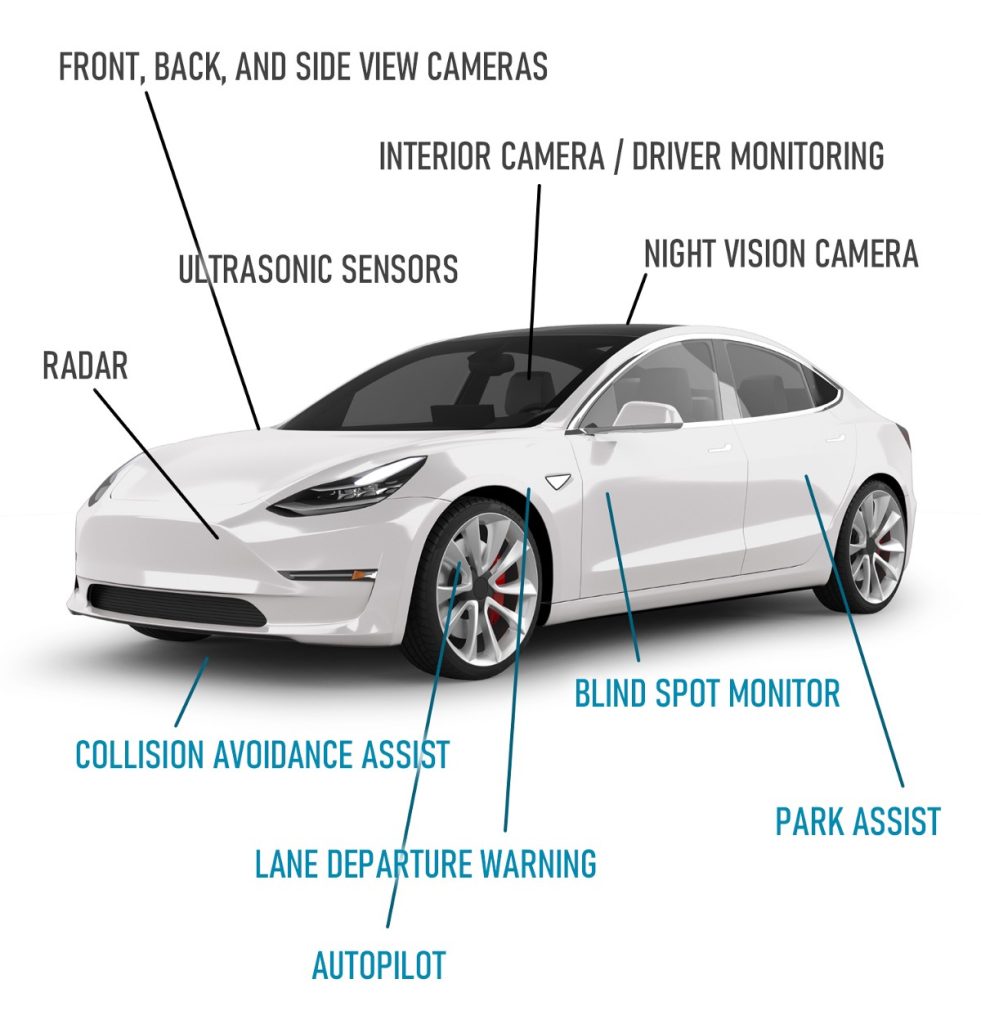
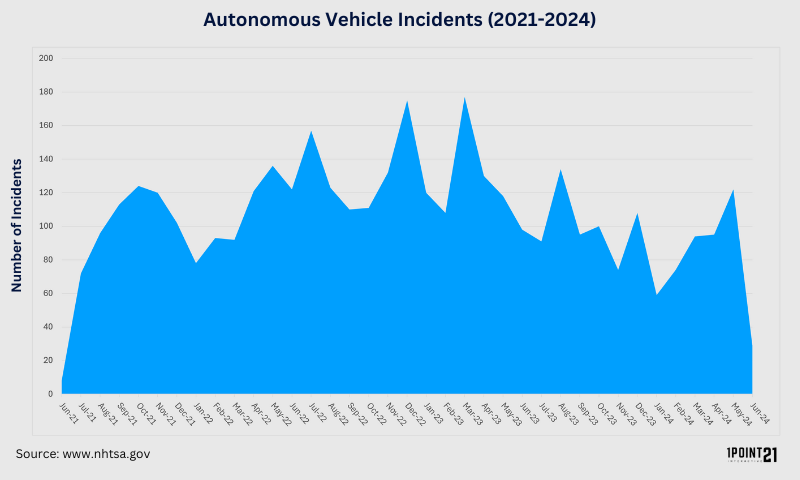
The purpose of these statistics are not to shed a negative light on Tesla, though show that artificial intelligence powered advanced driver assistance systems are prone to making mistakes. Since then, “There have been a total of 3,979 incidents involving autonomous vehicles reported, including 473 in 2024 so far” (Craft Law Firm). Out of all of these incidents, Tesla leads with 2,146 and in second place is Waymo with 415. What makes Tesla’s systems unreliable leading to these life threatening accidents? These large Tesla accidents are caused by their autopilot feature and full self driving systems. One of the biggest misconceptions about the system are with the words “‘Autopilot’ and ‘Full Self-Driving’, Tesla vehicles are classified as advanced driver assistance systems (ADAS), meaning they are designed to assist the driver, not replace them” (Craft Law Firm). This misconception leads drivers to believe that these systems are fully autonomous when in reality they are only assisted by AI. Another issue is that some of these advanced driver assistance systems have experienced miscalculations leaving the driver completely not at fault. These incidents have reflected “phantom braking, wrong-way driving, and failures to detect pedestrians and cyclists” (Craft Law Firm). These incidents are quite rare but have proven to be possible to occur. With the slightest hindrance, these systems can put human lives at risk. Tesla continues selling cars and users continue to use these advanced driving assistance systems powered by artificial intelligence. The only question is, would you trust artificial intelligence when you’re driving a car after learning the crash statistics of these systems?
——————————————————————————————————————————–
Works Cited
“Data Analysis: Self-Driving Car Accidents [2019-2024].” Craft Law Firm, 9 Dec. 2024, www.craftlawfirm.com/autonomous-vehicle-accidents-2019-2024-crash-data/.
Haan K. “24 top AI statistics and trends in 2023.” Forbes. April 25, 2023. www.forbes.com/advisor/business/ai-statistics/.
NATO Science & Technology Org. “Using Artificial Intelligence to Enhance Military Decision-Making.” YouTube, 3 Apr. 2024, www.youtube.com/watch?v=A2ZAHrT3UwM.
Nedelea, Andrei. “NHTSA Shares Adas Crash Data and It Puts Tesla in a Bad Light.” InsideEVs, NHTSA, 17 June 2022, insideevs.com/news/592878/nhtsa-adas-crash-data-tesla-first/.
Maathuis, Clara, and Kasper Cools. “The Role of AI in Military Cyber Security: Data Insights and Evaluation Methods.” Procedia Computer Science, Elsevier, 5 Mar. 2025, www.sciencedirect.com/science/article/pii/S1877050925004284.
Rose, C., Chen, J.H. Learning from the EHR to implement AI in healthcare. npj Digit. Med. 7, 330 (2024). doi.org/10.1038/s41746-024-01340-0
Sheikh, Ahmed Faizan. “How Advanced Driver-Assistance Systems (ADAS) Impact Automotive Semiconductors.” Medium, Medium, 16 Nov. 2019, medium.com/@faizan81/how-advanced-driver-assistance-systems-adas-impact-automotive-semiconductors-61daac109ac8.